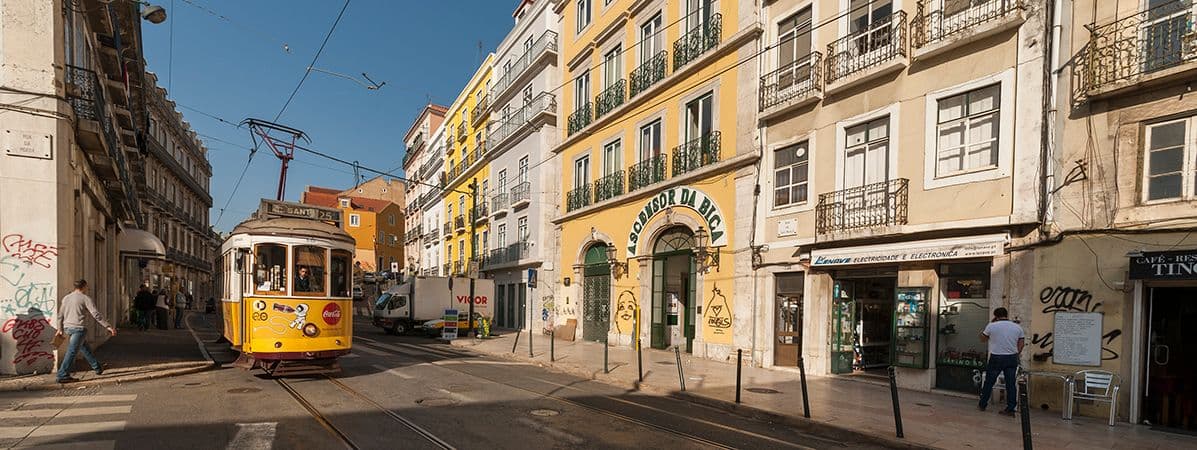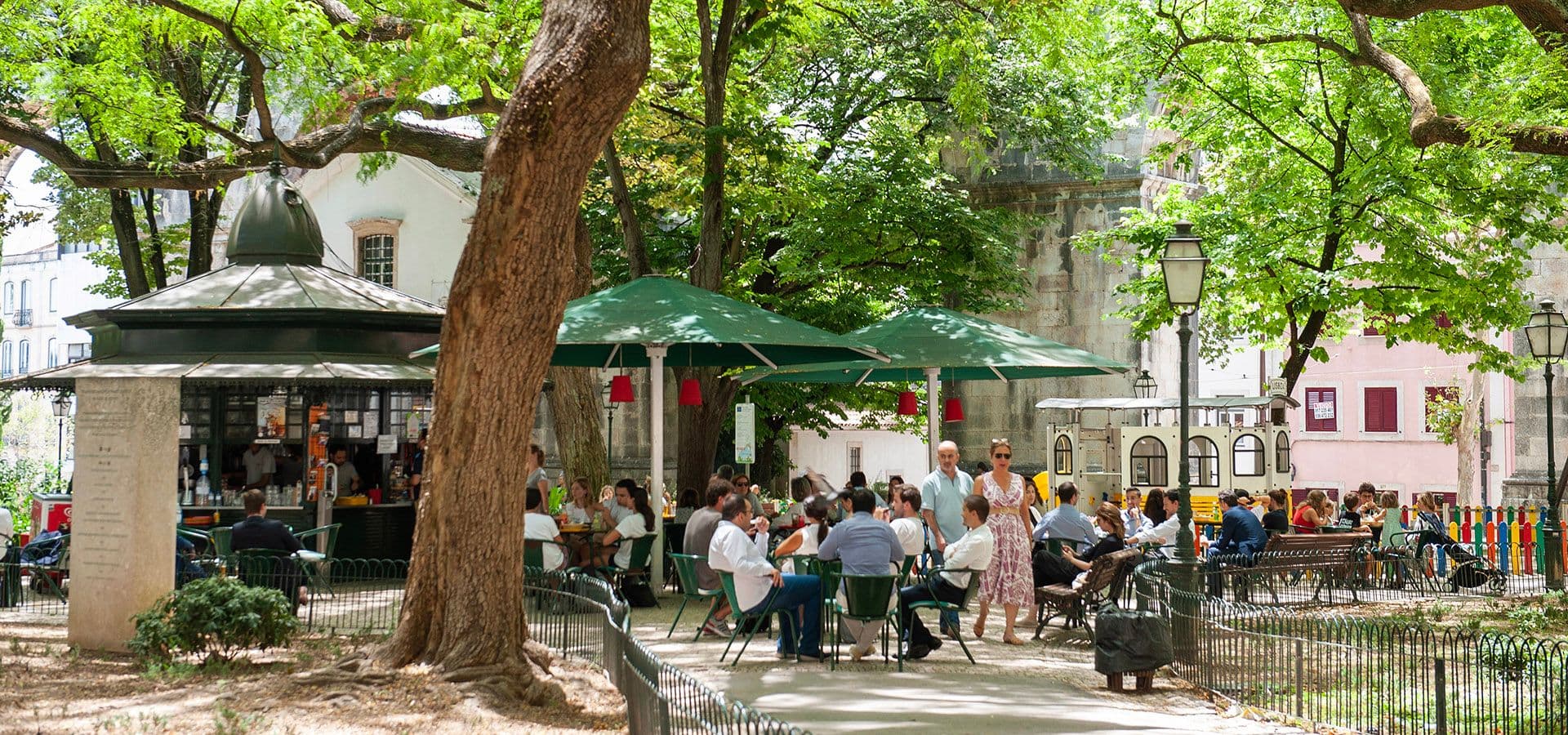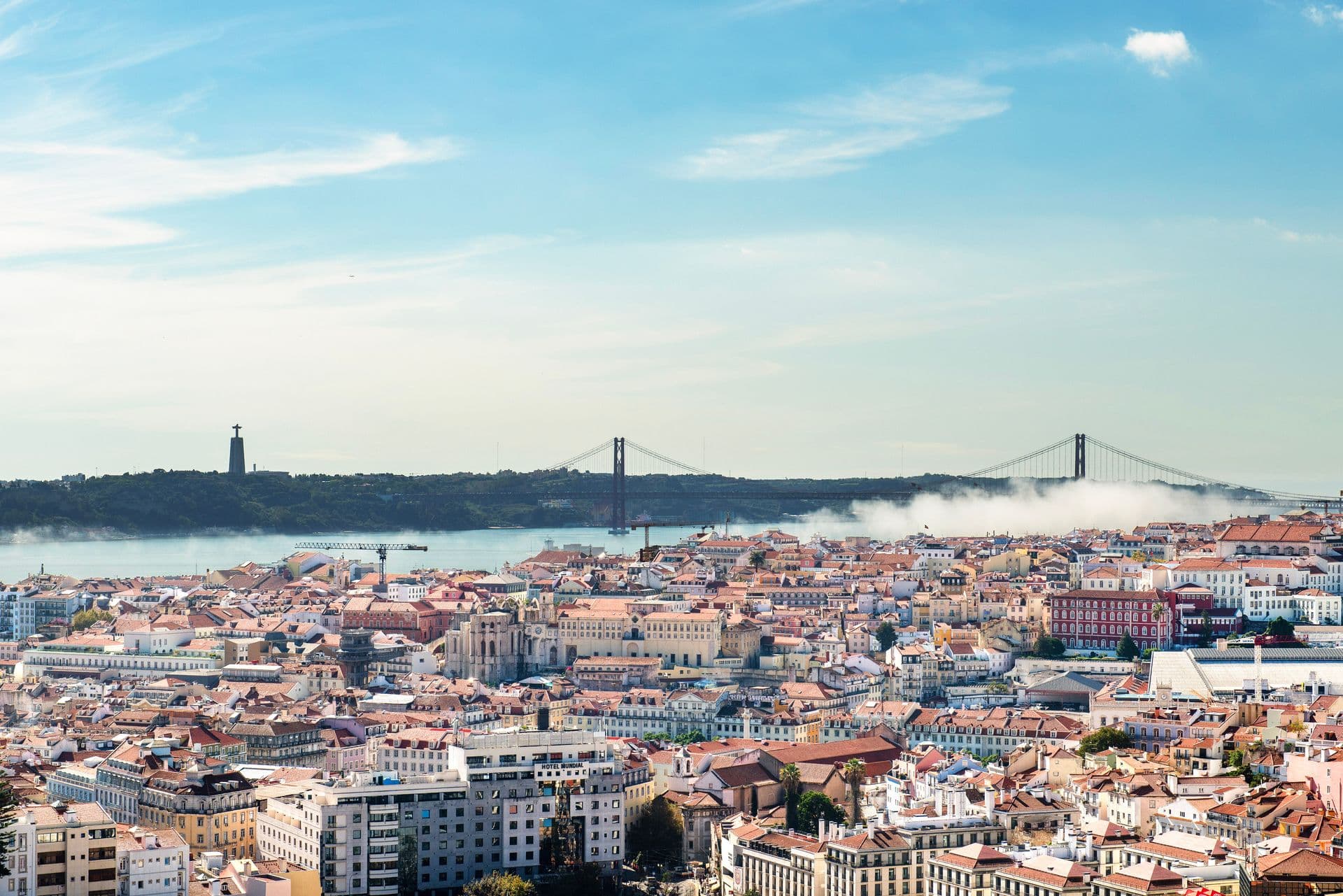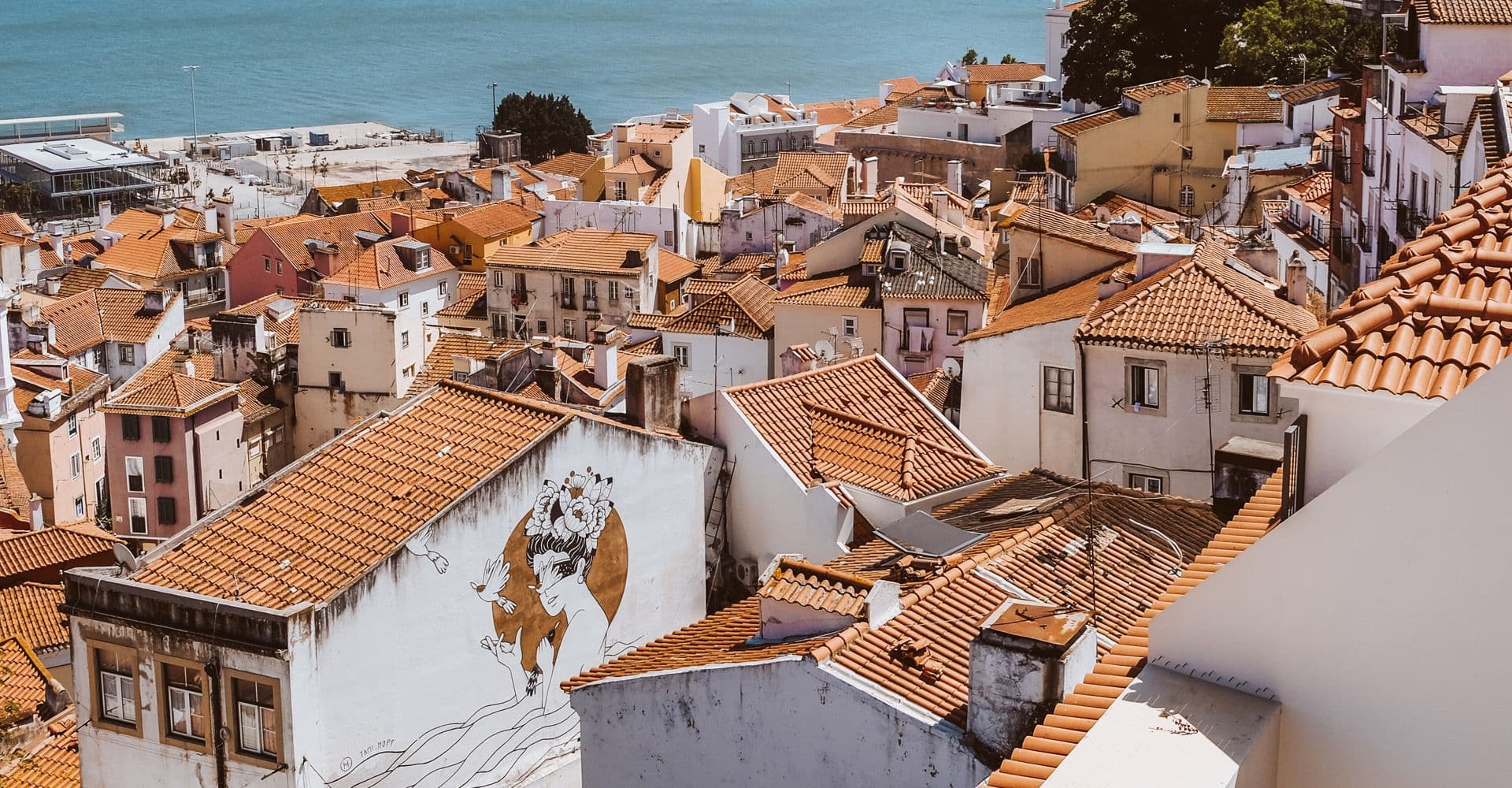
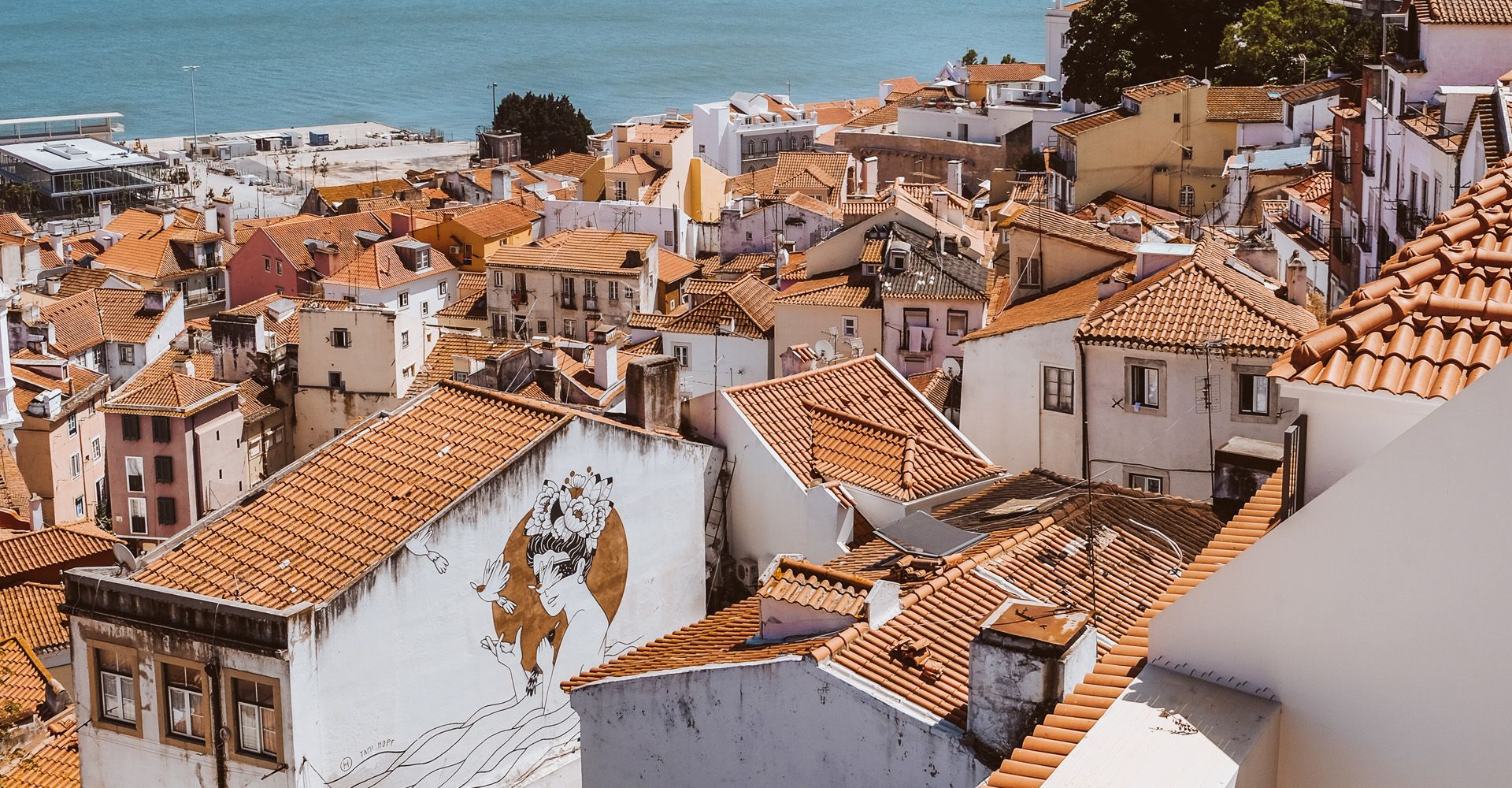
Alfama is the Lisbon you pictured before you booked the flight: a medieval maze of cobbled lanes tumbling down a hillside to the river, laundry strung between tiled façades, fado drifting out of tiny taverns after dark. It's the oldest neighbourhood in the city — old enough to have survived the 1755 earthquake that levelled most of Lisbon — and for a certain kind of traveller, there's nowhere else to stay. We've hosted guests here for years, so this is the honest version of the two questions we're asked most: is it safe, and should I actually sleep here?
The short answer: yes, stay in Alfama if atmosphere matters to you more than convenience — it's a safe, lived-in residential quarter, and the only real caution in the whole of central Lisbon is pickpockets in the crowded tourist spots. What you're really trading is flat ground: Alfama is stairs and slopes, and that's the honest catch, not safety.
Is Alfama safe?
Let's answer this one head-on, because it's the question that quietly stops people booking. Yes — Alfama is safe, including at night. Lisbon is consistently ranked among the safest capital cities in Europe, and Alfama in particular is a deeply residential neighbourhood: behind the postcard is a village of families who have lived here for generations, grandmothers watching the street from their windows, kids playing football in the squares. Its tangled, dimly lit lanes look mysterious, and film location scouts love them for exactly that — but looking atmospheric is not the same as being dangerous.
The one real caution in Lisbon is pickpocketing, not violent crime. Keep your phone and wallet zipped on the crowded tram 28, around busy viewpoints and at Rossio, and you've had the entire safety briefing. Walking Alfama's quiet back-lanes at midnight, you're far more likely to meet a cat or a couple sharing a bottle of wine than any trouble.
If you'd like the fuller picture on the whole city, our honest guide to where to stay in Lisbon has a section on "areas to avoid" — the short version being that there are none, in safety terms; there are only mismatches between traveller and neighbourhood. Which is what the rest of this guide is for.
What Alfama is actually like
Alfama is a mood before it's an address. Its lanes are too narrow and steep for most cars, so it stays quiet and walkable in a way the rest of the centre isn't. You'll get pleasantly lost — everyone does — and that's the point: the best of Alfama is the wrong turn that opens onto a viewpoint, a tiled saint on a corner, a tasca with six tables and a grill going out front.
Two things define the mood. Fado, the melancholy Portuguese song born in these very streets, spills out of small houses after dark — some touristy, some the real thing (ask us and we'll point you to the latter). And in June, the whole quarter erupts for the Festas de Santo António: bunting overhead, grilled sardines on every corner, dancing until dawn. It's the best week of the year to be here, and the busiest.
Where exactly to stay in Alfama
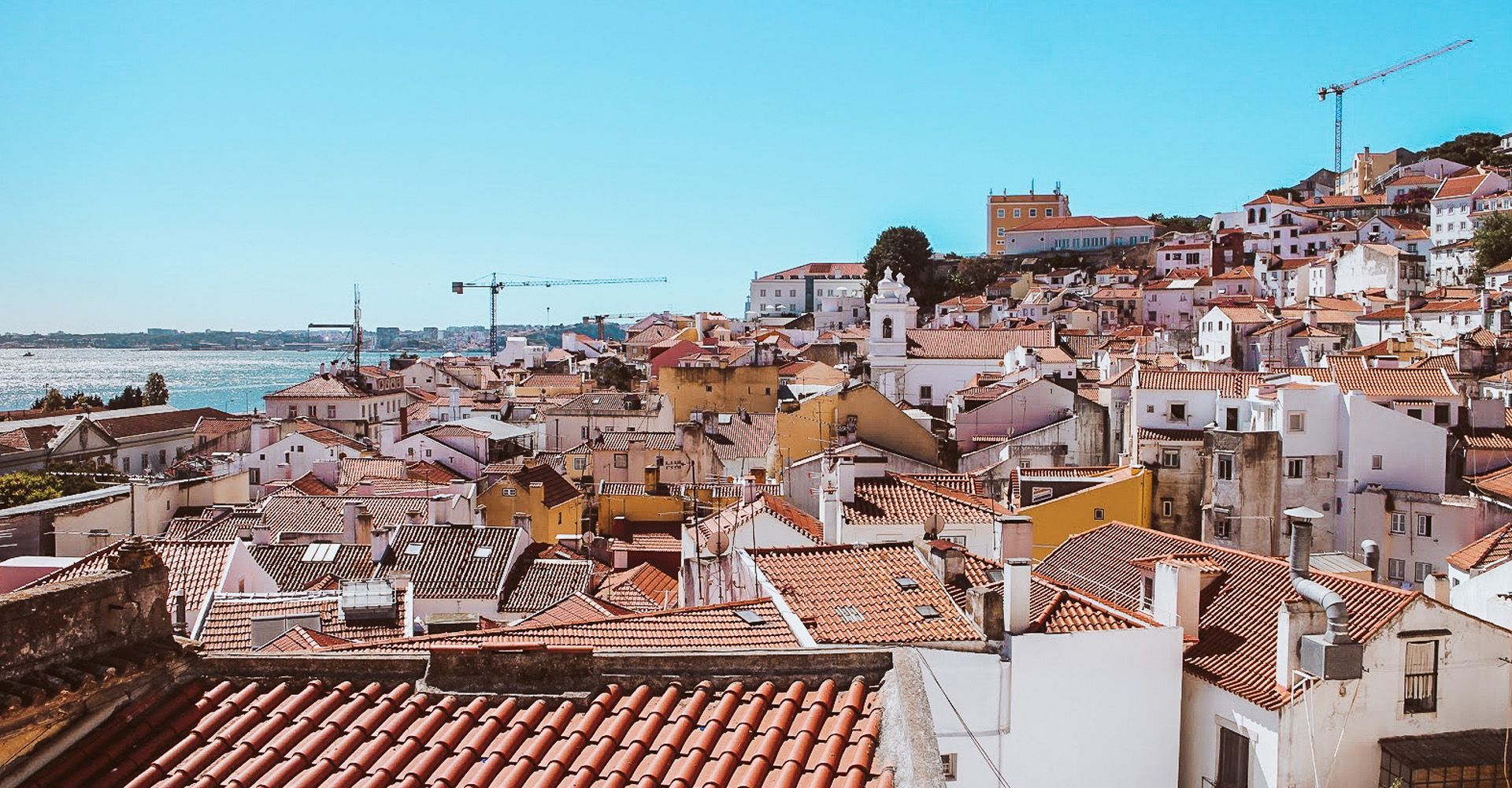
"Alfama" covers a hillside, and where you land inside it matters. Our own two apartments sit up by the Miradouro de Santo Estêvão, one of the quietest, leafiest viewpoints in the quarter — tucked among the stairs, away from the busier tourist runs, with the river laid out below your window. It's the Alfama people hope for: local, calm, and a two-minute walk from the noise when you want it.
As a rule of thumb for choosing your own spot:
- Up by the viewpoints (Santo Estêvão, Portas do Sol) — the quietest, most atmospheric, best views; the trade-off is the most stairs.
- Lower down, towards the Sé (cathedral) and Baixa — easier on the legs, flat Baixa a five-minute walk downhill, tram 28 at the door; a little busier.
- Avoid a ground-floor room directly on the tram 28 line if you're a light sleeper — the first tram rattles past early.
Our apartments here are full kitchens and space to spread out — the holiday-apartment way to stay, each one in a real neighbourhood rather than a hotel district. If you'd rather be looked after with a reception, daily housekeeping and handmade breakfast, our suites in nearby Santos are ten riverside minutes away.
The honest trade-offs
We'd rather you arrive knowing this than be surprised at the door:
- It's stairs and slopes. Taxis and rideshares can't reach every address; you'll often walk the last stretch, suitcase in hand. If stairs are a genuine difficulty, this is the one honest reason to choose flatter Baixa-Chiado instead.
- Bring a small suitcase and comfortable shoes. Alfama rewards the traveller who packs light.
- It's popular by day. The lanes near Portas do Sol fill with day-trippers from late morning; the magic is early, and after they leave at dusk — one of the best arguments for staying rather than just visiting.
None of this is a reason not to come. It's simply Alfama being Alfama, and knowing it in advance is what turns the hills from an annoyance into part of the charm.
What's on your doorstep
This is the real luxury of sleeping in Alfama: the things everyone queues to see are a short downhill wander from your door, and you can have them to yourself before the crowds.
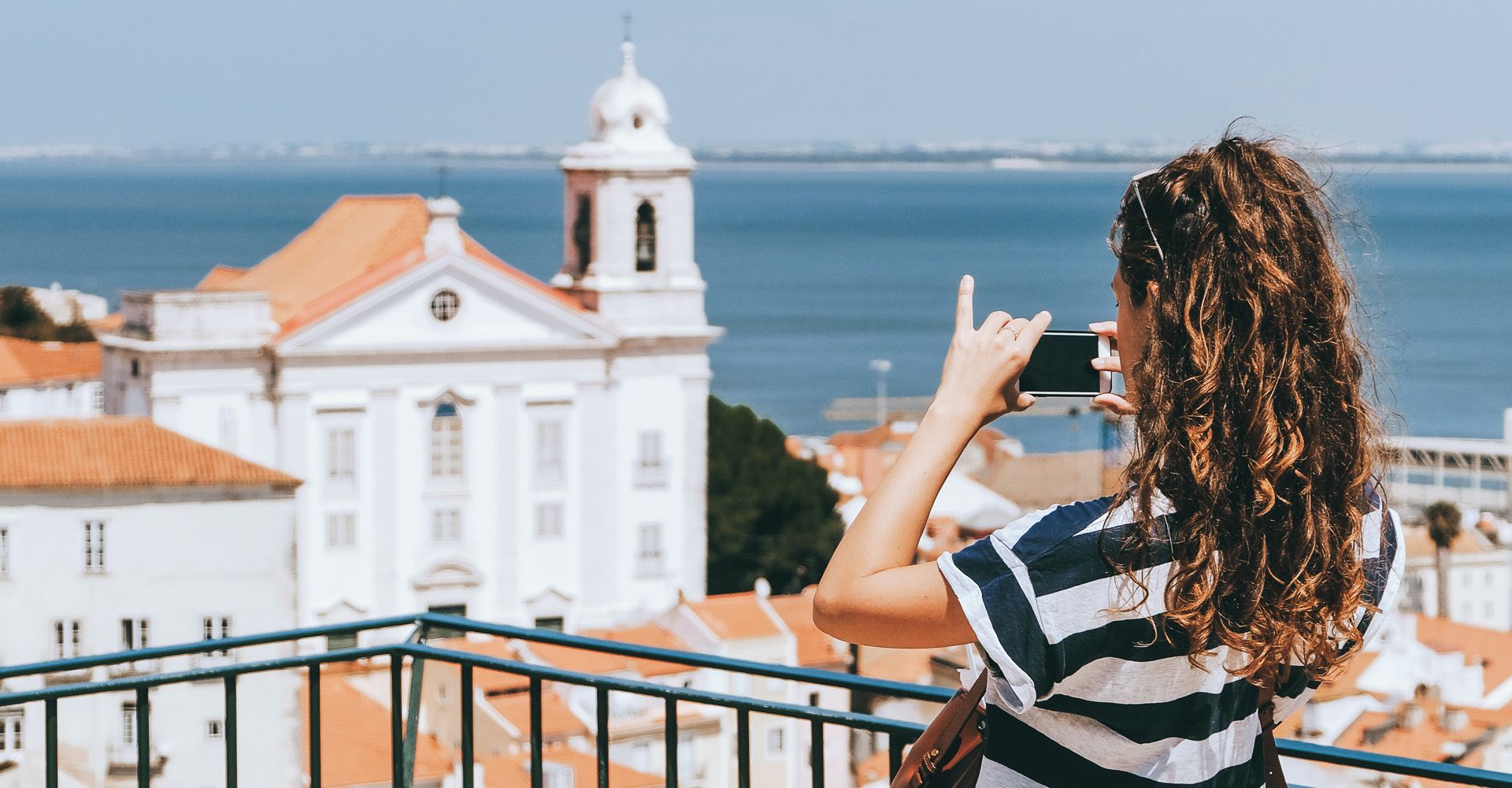
- Miradouro das Portas do Sol & Santo Estêvão — the two terraces with the postcard view over the terracotta roofs to the river. Come at sunrise or sunset.
- Castelo de São Jorge — the Moorish castle crowning the hill, with the widest views in the city.
- São Vicente de Fora — a 12th-century monastery whose azulejo cloisters and rooftop are worth every step.
- Panteão Nacional — the great white dome on the skyline; Amália Rodrigues, the queen of fado, rests inside.
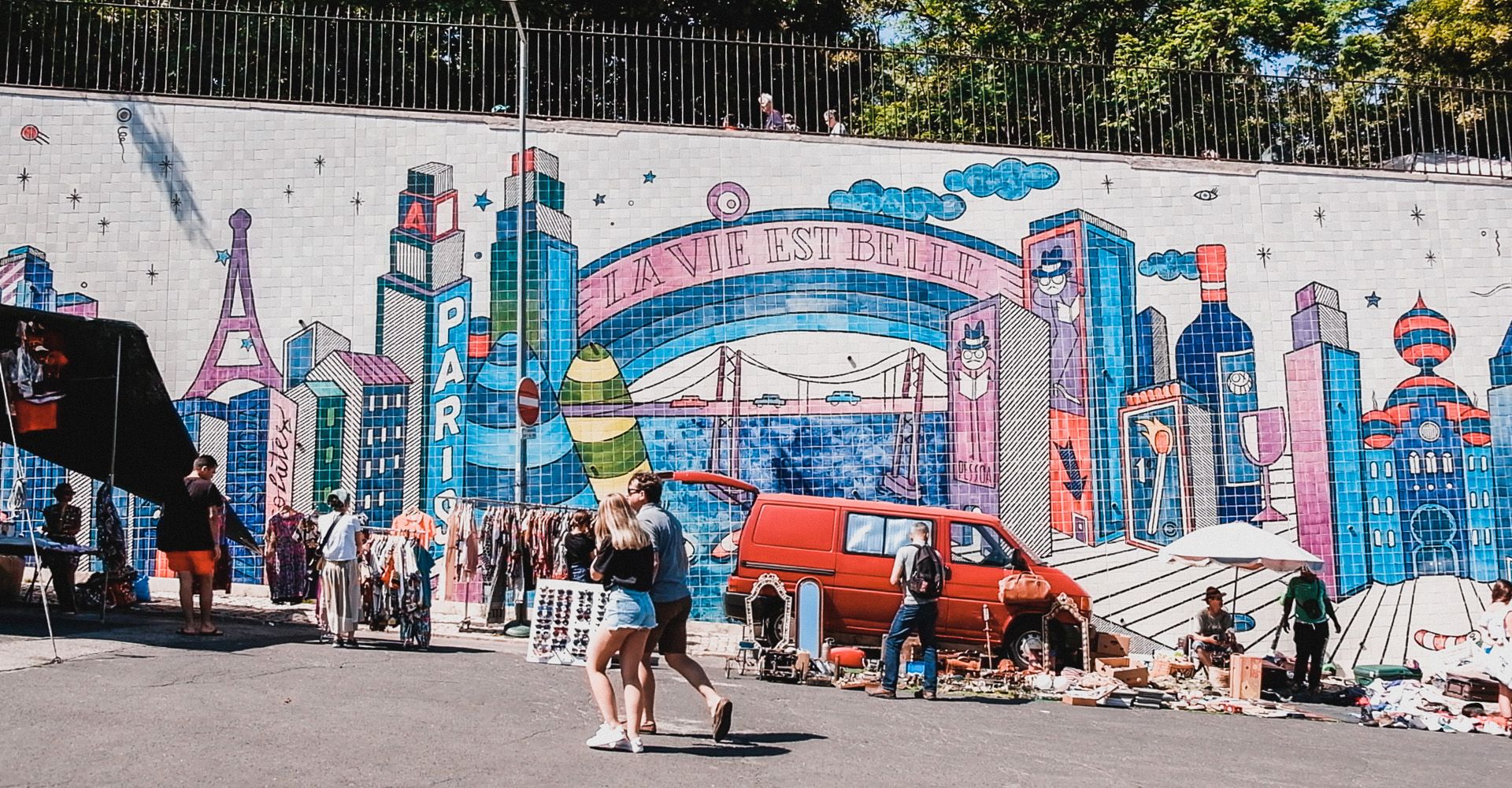
- Feira da Ladra — Europe's oldest flea market, on the Campo de Santa Clara every Tuesday and Saturday. Come for vintage treasure and the people-watching.
- The Sé — Lisbon's fortress-like cathedral, at the foot of the hill, where the tram 28 rattles past the door.
For a full walking route through all of this — with our family's own video guide — see our companion piece, the Graça, Alfama & Cathedral districts guide.
Where to eat and shop in Alfama
These are the places we actually send guests to — no laminated tourist menus, just the corners of the neighbourhood we love.
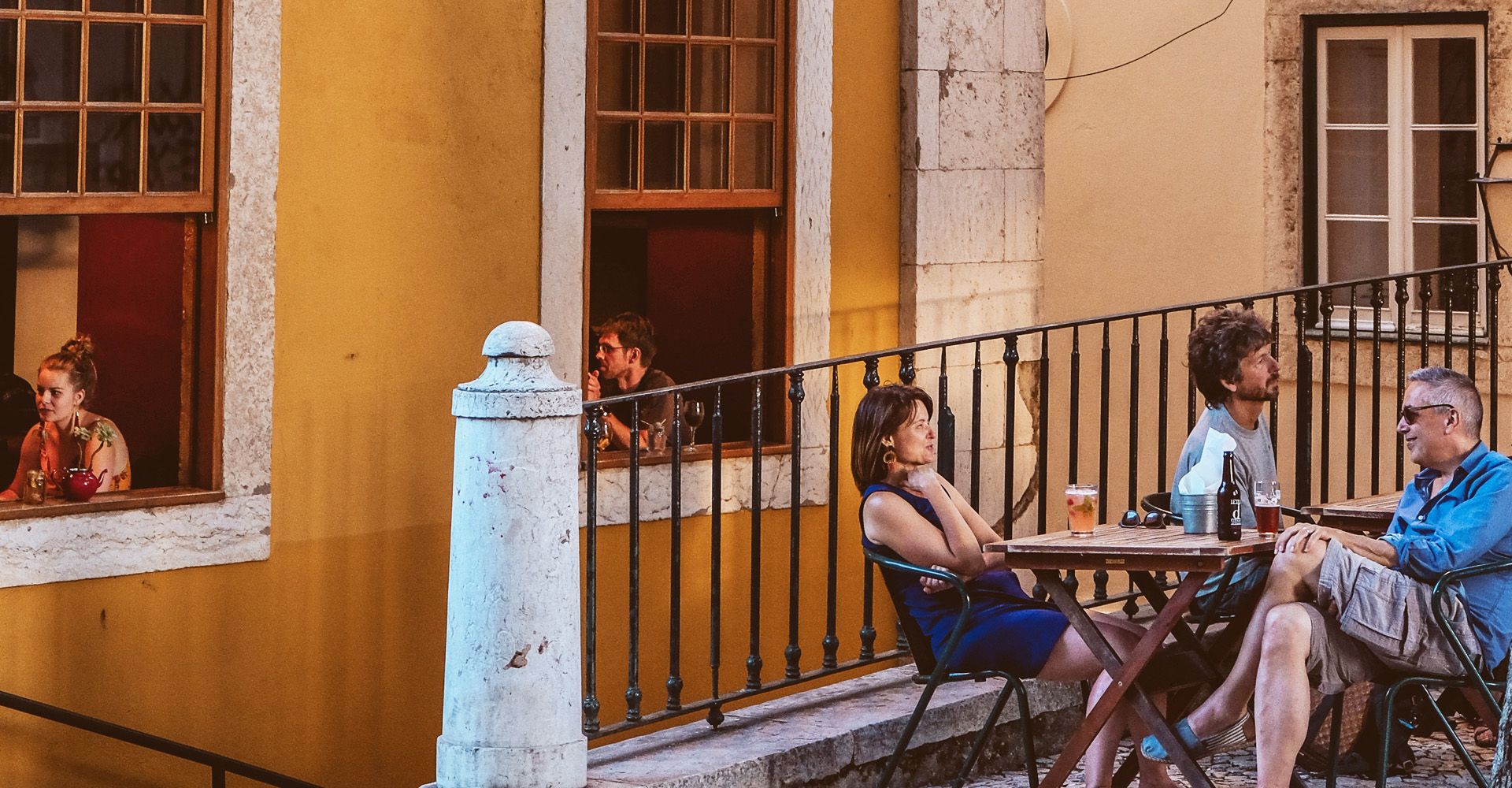
- Cruzes Credo — an unpretentious, vintage-feeling café right by the cathedral, with outdoor tables under the orange trees. R. Cruzes da Sé 29 · daily.
- Medrosa d'Alfama — good food and a relaxed table on a pretty little square in the heart of Alfama, often with live music. Largo São Rafael 6 · closed Tuesdays.
- Agulha no Palheiro — no sign outside, laid-back and nearly always full (book ahead); the sharing plates are worth it. R. Jardim do Tabaco 3.
- Prado — down towards the Sé, one of the city's most acclaimed modern kitchens: small plates, seasonal, beautiful room. Tv. Pedras Negras 2.
For a little shopping and a stock-up for the apartment:
- Benamôr 1925 — a historic Lisbon skincare house with gorgeous Art Deco packaging; the loveliest little gift to take home. Rua dos Bacalhoeiros 20A.
- Prado Mercearia — quite possibly the most beautiful grocer in Lisbon, stacked with local products; perfect for filling your kitchen. R. Pedras Negras 35.
And to build the perfect evening in, our guide to a Portuguese wine & cheese board and a little fado on in the background is the Alfama night we'd wish on you.
Getting to and around Alfama
From the airport it's a short taxi or metro-plus-walk; from the centre, the famous tram 28 climbs straight through, though it's often crowded (mind your pockets, and try to board early). Honestly, though, the only way to truly see Alfama is on foot — leave the map in your pocket and let the hill lead. Wear shoes you can climb in, and let the stairs be part of the story.
Quick answers
Is Alfama a safe area to stay in Lisbon?
Yes. Alfama is a safe, residential neighbourhood and is fine to walk day or night — Lisbon is one of Europe's safest capitals. Its narrow, atmospheric lanes look mysterious but are home to families who have lived there for generations. The only genuine caution anywhere in central Lisbon is pickpocketing in crowded spots such as tram 28 and busy viewpoints, so keep valuables zipped away.
Is Alfama a good place to stay for first-time visitors?
It's ideal if you want character and atmosphere over convenience, and don't mind hills and stairs. First-timers who'd rather have flat, central and easy should look at Baixa-Chiado instead; those chasing the "real Lisbon" feeling should stay in Alfama and enjoy having the quarter to themselves in the early morning and after dark.
What's the best part of Alfama to stay in?
Up by the Miradouro de Santo Estêvão and Portas do Sol for the quietest streets and the best views (with the most stairs), or lower down towards the Sé cathedral for easier access to flat Baixa. Avoid ground-floor rooms directly on the tram 28 line if you're a light sleeper.
Do you need a car in Alfama?
No — a car is a liability here. The lanes are too narrow and steep for driving and parking, and everything worth seeing is walkable or a short tram ride away.
Alfama isn't for everyone, and that's exactly why the people who love it really love it. If you're one of them, we'd be glad to host you: our apartments by the Miradouro de Santo Estêvão put a viewpoint at your door and fado around the corner — with our best rates, and a welcome bottle of Portuguese wine and a cheese board waiting, when you book direct. Torn between Alfama and somewhere flatter? Write to us — helping guests find the right corner of Lisbon is the part of the job we like most.